On 19 November 2023, Argentina changed course. It is now led by a president who champions an extractivist, anti-industrial model. Roberto Salvarezza, Minister of Science and Technology from 2019 to 2021 under President Alberto Fernández, has witnessed this first-hand. In 2021 and 2022, he chaired YPF Tecnología (Y-TEC) and then YPF Litio, two companies working to industrialise lithium. Here he tells us about the different stages of a project that began in the early 2010s, and how it was brought to an abrupt halt after Javier Milei came to power. For the former minister, “the old colonial pattern is repeating itself. Value is added in developed countries, and we supply the raw materials.”
When did the plan to industrialise lithium in Argentina begin?
The idea of moving up the value chain of electric batteries emerged in the early 2010s, under the presidency of Cristina Kirchner. “We have the lithium, so why shouldn’t we make the batteries?” the Argentine president asked a gathering of scientists. It was the start of a long road full of obstacles. In 2012, the company YPF Tecnología, or Y-TEC, was set up, and a few years later a pilot plant was installed there, producing the first experimental lithium-ion battery cells. The real turning point came later, when Gabriel Boric took office in Chile and Alberto Fernández in Argentina. The two countries found themselves thinking along the same lines and began to consider the entire lithium value chain. It was no longer just a matter of going from brine (salmuera) to carbonate, which already added value, but of going further, all the way to manufacturing electrical components. Chile already set aside a share of its production for industrialisation, roughly 12%. In Argentina, the first results came two years after Alberto Fernández took office, with the creation of the Unilib plant, designed to produce battery cells, this time on an industrial scale.
How did you plan to obtain the lithium?
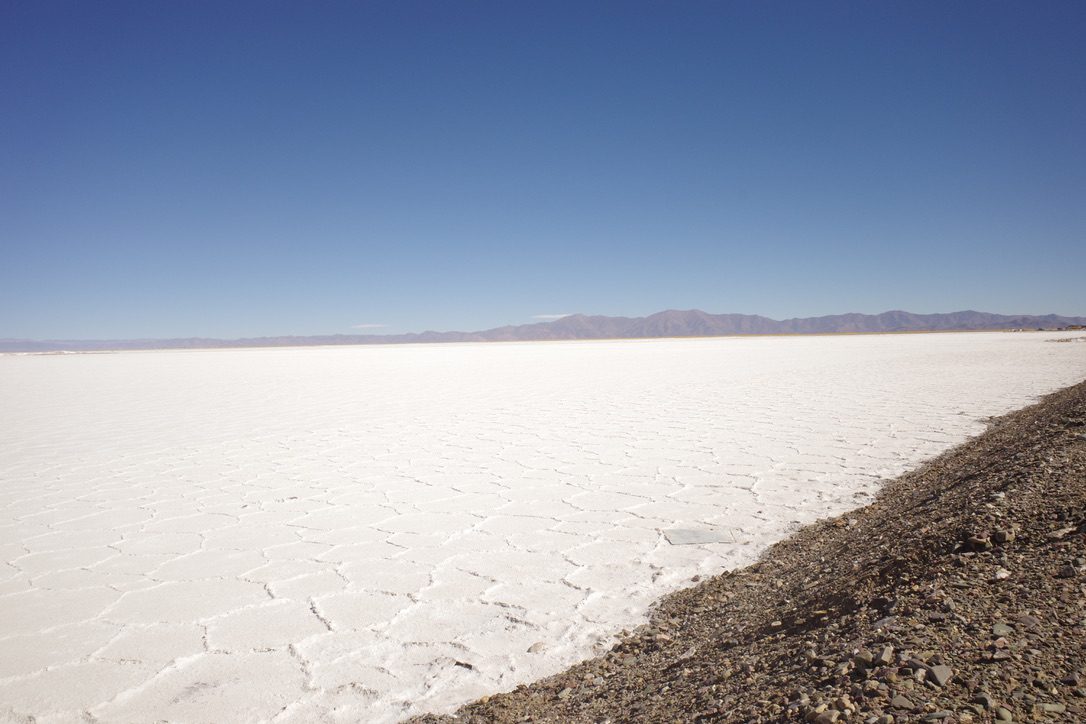
The key element was still missing: the raw material, which was in the hands of the mining companies. In 2022, the US company Livent agreed to sell Y-TEC fifteen tonnes of lithium carbonate, enough to keep the plant running for a year. That was when the project’s central idea emerged: a national rule requiring that a small fraction of lithium carbonate production (around 5 to 10%) be set aside for industrialisation on Argentine soil. This already exists in Chile.
How did the foreign mining companies react?
Foreign companies put pressure on policymakers, especially the provincial governments, which need lithium revenue. We also saw so-called lithium experts springing up in public debate, cheerfully defending mining interests. Scientific journals were filled with articles questioning the project’s feasibility and trying to discredit it. Argentina doesn’t have the cobalt and nickel needed to make batteries, they said. Or: industrialisation will hurt Argentine exports, reducing mining investment and the foreign currency inflows the country needs. But the first argument didn’t hold, because Unilib planned to use LFP (lithium iron phosphate) battery technology, so cobalt and nickel weren’t essential. As for the second, it ignored the fact that the project only concerned a tiny fraction of lithium carbonate production, not all of it.
[…]
But the project kept moving forward. In 2022, YPF Litio was created to carry out exploration in Argentina’s salt flats (salares). Then, at the 2023 Mesa del Litio (lithium round table), the Secretariat for Strategic Affairs (SAE) argued for a law requiring a fraction of lithium carbonate production to be set aside for industrialisation.
How did the mining companies’ opposition evolve?
It was enormous at first, but it gradually diminished. I spoke with many companies. They saw industrialisation as a threat to exports: if we industrialise, we’ll export less, that was their fear. But we showed them that the two were not incompatible. Only a small percentage of production would be kept for the domestic market, the region or Mercosur. The companies eventually accepted the idea of a quota, but remained reluctant to see the measure written into law. The discussions continued.
What was Europe’s attitude?
We were not opposed to foreign companies taking part in the project in partnership with YPF. It could have been, for example, an Italian company working with YPF, but in the end it was German pension funds that expressed interest in partnering with Y-TEC to produce LFP batteries on a large scale in Argentina. That model was feasible. Europe was clearly interested in our proposal, partly because it had only one major mining project in Argentina, Eramet’s. On that subject, I clearly remember a seminar I took part in, in December 2023, where the European Union supported us: “Latin American countries want to industrialise. Can we come up with a productive and inclusive investment plan? This does not mean take the lithium and run,” said Félix Fernández-Shaw, the EU’s representative for Latin America. Later in the discussions, he added: “Europe is not only seeking its own energy transition, but that of the whole world.” The seminar was very tense. Naturally, US and Chinese carmakers were keen to keep part of the carbonate for themselves. That is understandable, and in fact European companies wanted the same. But I repeat: none of this is incompatible with adding value in our country.
How did the Argentine provinces receive the project?
On the provinces’ side, progress was considerable too. In the discussions, there was a near consensus on the importance of industrialising the sector. The only disagreements were over the details: the provinces feared that the central government would encroach on their control of mineral resources. […] Having the provinces’ support was essential for us, because they control a good number of deputies and senators in Congress.
What happened after Javier Milei moved into the Casa Rosada?
Javier Milei’s rise to power brought the project to a serious halt. A new president was appointed to head YPF, who only had eyes for the unconventional oil and gas of Vaca Muerta. Overnight, Y-TEC stopped making any public announcements on the subject, and the SAE was simply abolished. For my part, I resigned from both my posts as president, as I felt the conditions were no longer in place for the project to move forward. Since then, the silence on the subject has been deafening. A disaster. National deputy Julia Strada (Unión por la Patria) introduced a bill on an industrialisable quota, building on our proposal. But the media quickly attacked it with false arguments. Although he is in the minority in Congress, Javier Milei controls it by negotiating with the provincial governors and their representatives in the legislature. What we are witnessing is a general return to a raw-materials economy. The old colonial pattern is repeating itself. Value is added in developed countries, and we supply the raw materials.
Did you find this article interesting?
Veines Latines is funded by its readers. No advertising, no shareholders: your support lets us report from all over Latin America with complete independence.