This article was first published on August 16, 2022 in Le Vent se lève.
On 7 August, Gustavo Petro and Francia Márquez officially took the reins of the Republic of Colombia, one of the most unequal states in the world. Within the country, the Pacific coast has historically been the neglected region. With 90% of its population of African descent, very poor and isolated, the region is paradoxically a gateway to international trade, legal or not. The main port of Latin America’s fourth-largest economy, the city of Buenaventura bears witness to glaring inequalities and illustrates the country’s ambiguous relationship with its Pacific coast. At the dawn of a national political renewal, taking a close look at Buenaventura helps grasp the nature of the challenges ahead.
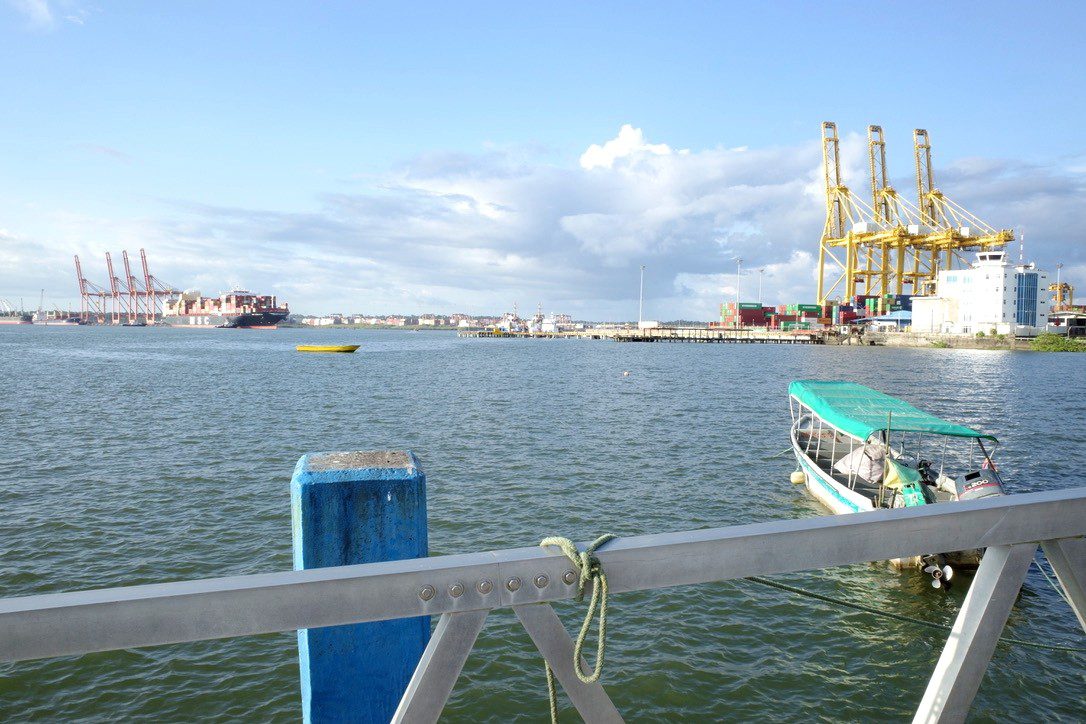
The city is made up of an island (la isla) and a mainland part (including a rural area of 19 corregimientos), connected by the El Piñal bridge. At the tip of the island, the city centre comes down to a handful of streets and the unmissable Malecón Bahía de la Cruz (commonly known as el parque), giving Buenaventura the air of a village at the heart of the world economy. From your very first steps in the city, as you leave the bus station, you are struck by the humid heat, the ugliness of the bare concrete, the general squalor and the omnipresence of “street dwellers”, wandering about or lying on the ground.
Founded by the Spanish conquerors on 14 July 1540, Buenaventura was above all a place for exchanging goods on the Spain–Panama–Cali route. During the civil war (1958-1960), the city was relatively spared, and people came to the coast to live la dolce vita. In the 1950s and 1960s, Buenaventura was the city of libertinism, especially the La Pilota neighbourhood, a permissive place where “young ladies” came from the interior.
While the city reaped the benefits of its busy port area, built from 1919 onwards, Colombia was already developing with its back turned to its Pacific region. Because it had a port, seen as a windfall for its inhabitants, Buenaventura received little public development aid. In reality, institutional weakness was glaring and educational and health infrastructure was lacking. Many people began to leave the city, soon known as the capital of the Manglaria (a tree associated with humidity and Blackness). Until the 1990s, however, the state-owned company running the port, Colpuertos, operated in a paternalistic way, guaranteeing residents regular wages and job security. Things changed from 1993, when the management of the port was privatised.
Because it had a port, seen as a windfall for its inhabitants, Buenaventura received little public development aid.
The privatised port, an enclave facing the global economy
In 1993, a decree issued under the presidency of César Gaviria privatised Colpuertos, and the management of the port passed to the Buenaventura Port Society (SPB). Two more ports were later built in the city: the Buenaventura Container Terminal (TcBuen) in 2008 and the Aguadulce port in 2017.
The SPB is a mixed-economy company owned mainly by wealthy Colombian families. In the first half of 2020, it handled 41% of all cargo in the country. Public bodies hold only a small minority of its capital: the Buenaventura mayor’s office (15%), the Ministry of Transport (2%) and the Ministry of Agriculture (0.5%). TcBuen, for its part, is 66.2% owned by the Barcelona Container Terminal, a Spanish company. Finally, the Aguadulce port belongs to a Philippine company (chaired by billionaire Enrique Razon) and a Singaporean company. The owners who run Buenaventura’s ports do not live in the city; they live in Cali, Bogotá, Medellín or abroad.
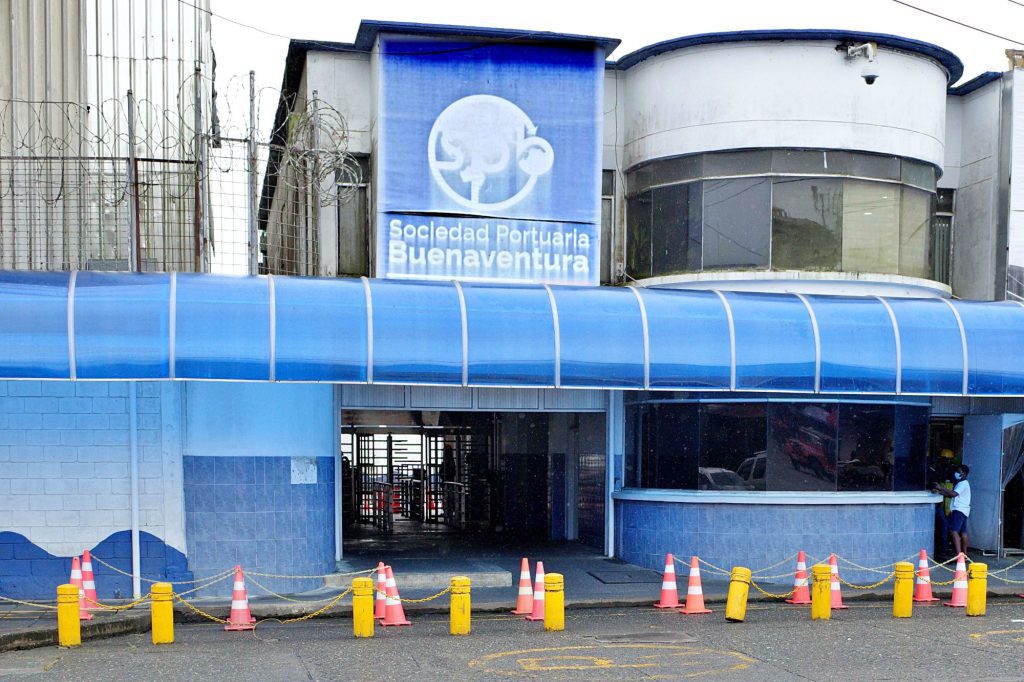
The disappearance of Colpuertos badly damaged the ties between the population and its port economy. Two watertight economic circuits emerged in the city: a modern, global circuit built around the port (employing skilled workers from abroad) and a local circuit based on getting by. Buenaventura companies do not win port management contracts, and residents feel like mere spectators of the wealth flowing in and out of their city. The men “live off the tide” or work with timber, and the women sell seafood and produce viche. Those with an employment contract mostly work in hotels and restaurants (32% of the working population) or as unskilled labour for the port sector (23%), but these jobs are very precarious.
Ángel worked for a company specialising in industrial transport but, feeling badly underpaid, chose to resign. He now works as a taxi driver, like Alex, who used to be employed by TcBuen but left when the company started paying him by the hour (6,000 pesos, or 1.35 euros). Many people take up taxi driving, where they feel freer, especially in choosing their hours. According to Alex, it is a profitable activity because the city is so spread out. People living in the barrios far from the centre need taxis to get to work or to run all kinds of errands. Vanessa, meanwhile, is a waitress in a fish restaurant on the edge of the Malecón. With no employment contract, she is paid her wages (30,000 pesos) in cash every day.
The working lives of Ángel, Alex and Vanessa are commonplace. Law 50 of 1990 made Colombian labour law more flexible in order to cut companies’ production costs, and hourly and fixed-term contracts became widespread. The precarious jobs of port workers are generally outsourced. Whether they are dockers, machine operators, winch operators, planners, monitors, supervisors or anything else, Buenaventura residents working at the port are hired by outside companies. The SPB only handles the administrative management of the port and delegates the more operational side (such as loading or storing goods) to other private firms.
Law 50 of 1990 made Colombian labour law more flexible in order to cut companies’ production costs, and hourly and fixed-term contracts became widespread. The precarious jobs of port workers are generally outsourced.
The city’s colossal socio-economic disparities go hand in hand with visible racial inequalities. On the coast, white people from the interior are often lumped together as paisas (even though the “real paisas” are people from Antioquia). In Buenaventura, the paisas are the owners of the thriving urban businesses and Afro-descendants (88% of the city’s population) are their employees. Preferring to live elsewhere, the paisas who have “made it” run their businesses from Cali or another city in the interior.
With only 10% of the population reportedly in formal employment, many young people with no prospects join armed groups to earn a living. In this context, many want to leave, for abroad or another city, but not all of them get the chance.
In Buenaventura, the paisas are the owners of the thriving urban businesses and Afro-descendants (88% of the city’s population) are their employees.
A city controlled by armed groups
In January 2021, residents of many neighbourhoods no longer dared to go out after 6 p.m. This had nothing to do with Covid-19 and everything to do with insecurity on the streets. Buenaventura’s geographical location and its connection with many rivers make it a strategic place for drug trafficking, and illegal groups fight over territory. The most powerful group in Buenaventura today is called La Local, led by the Bustamante brothers. It works in partnership with Colombia’s main cartel today, los Urabeños.
Alejandra is twenty-two and studies public accounting. She lives in the San Luis neighbourhood in comuna 7, one of the most feared: “The groups are part of normal life here. People have got completely used to them; they’re not even surprised any more. You see them walking down the street, talking to the police. You even see their guns.” She clearly remembers the time she overheard a conversation: “Do you know who I am? I’m the one who protects the neighbourhood around here.”
Armed gangs take advantage of young people’s economic distress and of the fact that minors cannot be held criminally responsible. Children drop out of school early to look for work (the dropout rate among 15-19-year-olds reaches 40%), find none, and are lured by the monthly wage of two million pesos (about 500 euros) offered by armed groups. Older people are affected too, as Carlos, who spent several years in prison, can testify. Although he now drives a taxi, he does not rule out going back to his former activity: “As Pablo said, better to live five years at the top than ten years struggling.”
The armed groups have institutionalised extortion. You have to pay a tax (la vacuna) to enter and leave certain neighbourhoods. Shopkeepers have built the vacuna into their accounts. Oswaldo works for a company selling panela (blocks of unrefined cane sugar that Colombians love). He feels he is going about his business normally when he comes to Buenaventura, but he knows he will have to pay the groups that control the areas where he makes his sales.
From the late 1990s onwards, this territorial grip caused large-scale displacement. At first it affected only rural communities, then in the 2000s it spread to the urban area, making Buenaventura the city with the highest rate of intra-urban displacement in the country. María is a waitress in a hotel facing the Malecón. She lived in comuna 7 with her son but was forced to move to comuna 2 after the violence of January 2021. And yet the situation had improved. Seven years ago the port had been militarised and the casas de pique demolished, but since late 2020 the city has seen a resurgence of violence. The cause: the group that had been in charge until then, La Local, split into two rival gangs waging a territorial war. In the end, 2021 was the most violent year in Buenaventura since the 2016 peace agreement.
Residents do not always emphasise this violence. Sandra is a receptionist in a hotel near the Malecón. For her, there is insecurity in Buenaventura just as there is everywhere else. She has always lived there and does not feel she lives in a particularly dangerous city. Eduardo is Venezuelan and has lived in Colombia for three years. Buenaventura is the city that welcomed him and allowed him to work: “I feel I can make a life here. There’s violence, but like anywhere else. On the Isla it’s calm because there are lots of police. I got robbed once, but you shouldn’t focus on the negative. Apart from the criminal gangs and Covid, it’s a good place here.”
Those who dare to stand in the way of the armed groups, however, face systematic threats and killings. Orlando Castillo is a social leader and member of the Inter-Ethnic Truth Commission of the Pacific region (CIVP). “Hello, how are you? Listen, we need to talk to you before it’s too late” is the kind of text message he receives. This is a reality across the whole country, as shown by the organisation Somos Defensores, which documented a worrying rise in violence against human rights defenders between 2010 and 2019.
Although he now drives a taxi, he does not rule out going back to his former activity: “As Pablo said, better to live five years at the top than ten years struggling.”
The port, a local curse?
“Buenaventura doesn’t have a port, Buenaventura suffers from a port”: those are the words of mayor Víctor Hugo Vidal. Every day, colossal quantities of goods pass along the city’s roads, their contents and destination unknown to residents. The trucks and tractor units going in and out of the port bring dust and noise to those living nearby. They bear the names of the big multinational logistics companies, such as Evergreen or Maersk (the world’s largest container shipping company).
Port expansion is a scourge for residents, and TcBuen is strongly criticised for the harm it has caused people in the port area: fishermen’s livelihoods destroyed, public spaces for leisure lost… The verdict of a young social leader is striking: “Before TcBuen, we went fishing to feed ourselves, but today there are no more fish and we have to go and load containers to bring a little money home.”
“Buenaventura doesn’t have a port, Buenaventura suffers from a port”: those are the words of mayor Víctor Hugo Vidal.
Public authorities could correct course, but their mega-projects respond more to the network logic of international transport than to any concern for balanced local development. The lack of roads for freight and the need to ease traffic, for example, led to the construction in the early 2000s of the Interna-Alterna road, able to carry up to 2,500 heavy vehicles a day. During the works, the wastewater system was damaged, causing infections and skin and hair diseases among local residents. Moreover, the initial works, like the extension of the project some ten years later (2017-2019), were carried out in disregard of communities’ collective right to prior consultation. This paved the way for the forced displacement of families who struggle to assert their land rights and are under pressure from armed groups. According to an activist from the network of Afro-Colombian organisations Proceso de Comunidades Negras (PCN), Buenaventura’s residents are reduced to being “neighbours who get in the way of the country’s development”.
An indifferent state
With 90% of workers in the informal economy, the vast majority of the city is not covered by any social security scheme. Even more excluded, people in the rural areas have to rely on traditional medicine. Access to water is also a serious problem. Its supply was entrusted in 2002 to the mixed company Hidropacífico, but complaining that the market was unprofitable, the company has always refused to invest in maintaining the infrastructure. The results are staggering: tap water is not drinkable, and more than a quarter of the population reportedly has no access to an uncontaminated water source. While Buenaventura had the highest Covid-19 death rate in the country at the end of 2020, the city was unable to offer its population even regular handwashing.
As for justice, most residents cannot afford a lawyer in the event of a dispute. Under a national programme aimed at making justice accessible to as many people as possible, Buenaventura has a casa de justicia, but Nelly is the only lawyer on the premises. For several years she has been asking the mayor’s office for more resources and for other lawyers to join the programme: “At first there was just an old computer and a fan in my office. I had to buy everything else out of my own pocket. There’s no internet either, not even soap in the toilets.” According to Nelly, the situation is getting worse: “There used to be a representative of the Fiscalía [the public prosecutor’s office] so people could file complaints on the premises, but now they have to go all the way to the city centre.”
The state is also very far from fulfilling its role in fighting crime. After the violence of 2021, it sent hundreds of police officers and soldiers, deployed mainly in the city centre. These measures certainly improved security in part of the city in the short term, but they do nothing about the structural causes of crime, such as collusion between the security forces and illegal armed groups. According to Colonel Héctor Pachón, “In Buenaventura, no state body can honestly claim never to have been infiltrated by drug trafficking.” For Marisol Ardila, a lecturer at the Universidad del Pacífico: “Corruption here is worse than anywhere else in the country.” The proliferation of news items in the local press announcing police arrests, suggesting that the police and the courts are doing their job, is misleading. This chronic media spectacle is followed by powerless courts that charge suspects with minor offences or hand down derisory sentences, such as the hardly dissuasive penalty of house arrest without an electronic tag.
Struggles with a national echo
According to PCN spokespeople, Buenaventura is not a poor city but an impoverished one. Marked by extreme poverty inherited from colonial times and neglected by the Colombian state since the 1960s, the city embodies the illusions of integration into the globalised capitalist economy.
In Buenaventura, 66% of the population lives below the poverty line and life expectancy is 51, eleven years below the national average. Faced with an indifferent state, infiltrated by armed groups and at the mercy of globalised capitalism, local people are organising. In 2017, a civic strike carried by slogans such as El Pueblo no se rinde, carajo (The people won’t give up, damn it) shut down the city for twenty-two days in a row. After the violence of late 2020, strong protests managed to draw the attention of Colombians in the interior through the resounding hashtag “SOS Buenaventura”. Finally, during last year’s Paro nacional, blockades of the El Piñal bridge and the Interna-Alterna road stopped goods from reaching the interior of the country, putting the city’s problems back into the national public debate.
According to PCN spokespeople, Buenaventura is not a poor city but an impoverished one. Marked by extreme poverty inherited from colonial times and neglected by the Colombian state since the 1960s, the city embodies the illusions of integration into the globalised capitalist economy. Politically too, the 1991 Constitution, which granted specific rights to Afro-descendant communities, has not guaranteed their emancipation. According to Francia Márquez, the country’s new vice-president, “the dynamics at work in Buenaventura are an exacerbated expression of what is happening at national level”. Everything remains to be done. With the left having just won a historic victory in the presidential election, Buenaventura will undoubtedly remain one of the most revealing places in which to measure the country’s coming transformations.
Did you find this article interesting?
Veines Latines is funded by its readers. No advertising, no shareholders: your support lets us report from all over Latin America with complete independence.